Neuro fatigue is one of the most under-recognised symptoms in stroke and brain injury recovery. It isn’t tiredness in the usual sense; it’s a deep, cognitive exhaustion that can appear suddenly and linger long after a task has ended. Traditional therapy environments can inadvertently heighten this fatigue.
Stroke survivors and people living with brain injury frequently speak about rehab not only as a physical challenge, but as an emotional and psychological one: progress that feels slow, repetition that feels draining, and the sheer mental effort of trying again and again. This reality is why digital tools, including mixed reality, must be designed with more than technology in mind. They must account for human factors – fatigue, motivation, confidence, frustration, and hope. When these elements are meaningfully addressed, digital rehab can help people stay engaged for longer, feel more in control of their recovery, and access high-quality practice even between appointments with their clinical team. And when it works, the difference is palpable in the stories of patients themselves.
The Hidden Weight of Neuro Fatigue
Neuro fatigue is one of the most under-recognised symptoms in stroke and brain injury recovery. It isn’t tiredness in the usual sense; it’s a deep, cognitive exhaustion that can appear suddenly and linger long after a task has ended. Traditional therapy environments can inadvertently heighten this fatigue – busy rooms, multiple stimuli, long waits between exercises, and complex instructions all add to the cognitive load.
Digital rehab tools need to counter this, not add to it. That means designing systems that reduce decision-making, minimise unnecessary steps, and allow people to enter a task quickly, without mental friction.
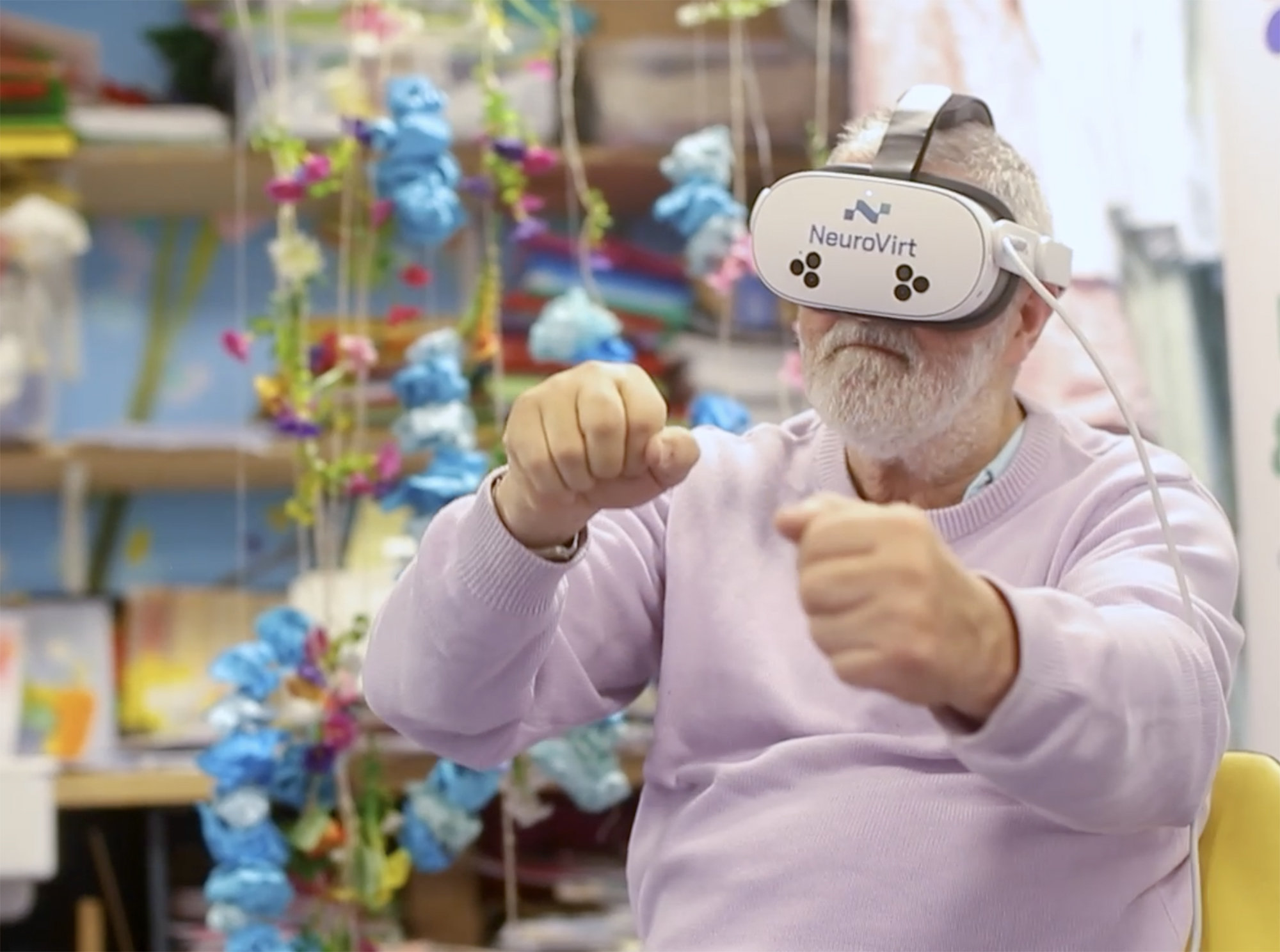
For many patients, mixed reality offers that clarity. There’s one environment, one task, and one set of cues. As one participant, Myrtle, told us after trying mixed reality during a community event in Belfast:
“I was amazed at how well I could actually use my weaker limb… my right arm would be the weakest part of my body...and I enjoyed it very much”
In her experience, the focus of the task helped her cut through the noise. The environment didn’t overwhelm her – it guided her. Even patients who are unfamiliar with technology often find that when the experience is well-designed, it takes less energy to participate, not more.
Motivation: A Force Multiplier in Rehab
Motivation is not a luxury in neurorehab; it’s a central driver of functional gains. High-dose, high-repetition practice is one of the strongest predictors of improvement, yet it is one of the hardest things to maintain over weeks and months.
Digital rehab approaches must therefore do more than track performance. They need to support motivation from the ground up.
For Richard, the first person to ever participate in a NeuroVirt case study, motivation came not only from the exercises themselves, but from feeling capable and confident while doing them. Due to hemiparesis, he had to find a way to don the headset one-handed – a challenge he solved so effectively that NeuroVirt teaches his method is to clinicians today as “the Richard Method.” His experience in the games reflected the same sense of independence:
“You can just very easily access the game, get on with it, know what you’re doing, and I think just enjoy it as well. And I think this game seems to tick all the boxes for me.”
Motivation grows when tasks feel achievable, meaningful, and enjoyable. For many survivors, digital rehab offers something familiar – especially for those who played games before injury – and something reassuring: clear feedback, consistent design, and a sense of progress that is visible rather than abstract.
Reducing Fear and Re-building Confidence
Fear is rarely discussed openly in neurorehab, but almost every clinician sees it in practice: fear of falling, fear of pain, fear of doing a movement wrong, or fear of “messing up” in front of others. These anxieties tighten muscles, limit range of motion, and slow down recovery. The controlled nature of mixed reality environments can help reduce these fears by removing real-world hazards and allowing patients to experiment safely. When the brain no longer perceives an immediate threat, movement quality often improves.
Jenna, a brain injury survivor, described this shift beautifully during her first experience with mixed reality:
Jenna: “With me being able to use my right hand... It was just like an automatic reaction to use the right-hand side.”
Carer: “Whereas you wouldn’t normally use it.”
Jenna: “Yeah, no I wouldn't.”
For someone who has learned, often subconsciously, to avoid using the weaker limb, this automatic engagement is significant. When she was asked whether the activity strained her or felt uncomfortable, she replied:
“No it didn’t.”
In that absence of discomfort and fear, real rehabilitation can take place. The environment encourages the weaker limb to participate without forcing it, and positive movement experiences begin to overwrite the patterns of avoidance that so often hinder recovery.
Designing for Cognitive Simplicity
A key human factor in digital rehab is cognitive simplicity: creating experiences that are intuitive enough to require minimal explanation or setup. Every moment spent troubleshooting is a moment not spent practising. Patients tell us repeatedly that they value straightforward, predictable interfaces. When someone is already dealing with fatigue or anxiety, asking them to navigate multiple menus, complex gestures, or lengthy instructions quickly becomes a barrier.
This is where thoughtful mixed reality design excels: large visual cues, single-purpose tasks, and environments that adapt to the user’s capabilities. For people with aphasia or communication difficulties, simplicity isn’t just beneficial – it is essential to participation. The more that digital tools respect cognitive load, the more they empower patients to engage independently and confidently.
The Role of Joy in Rehabilitation
Clinicians know that rehab isn’t always joyful. It’s hard work, often tedious, and progress can feel incremental. But when moments of joy appear – a smile, a laugh, the surprise of success – they have an outsized effect on morale and adherence. Digital tools are uniquely positioned to support these emotional moments. They provide immediate feedback, colourful environments, achievable goals, and a sense of agency that can be lost after injury.
When Myrtle realised how much she could do with her weaker limb, when Richard found himself enjoying the tasks, and when Jenna instinctively used her right hand, those were more than clinical observations. They were emotional milestones.
Joy doesn’t replace therapy intensity – it enables it. A motivated patient will do more repetitions., confident patient will attempt more challenging tasks, and a jjoyful experience makes people want to come back tomorrow. That's why in a field where adherence is a constant challenge, joy can be clinically meaningful.
Human Factors Are Clinical Factors
As healthcare systems explore broader use of digital rehabilitation, patient experience must be considered as seriously as the technology itself. Fatigue, motivation, clarity, and confidence aren’t “soft” elements; they influence motor learning, adherence, and ultimately recovery.
If mixed reality tools can reduce cognitive load, support safe practice, and spark moments of joy, they can become powerful complements to clinician-led therapy. But this requires a human-first approach: listening to patients, observing how they engage, and shaping the technology around their needs rather than asking them to adapt to it.
The stories from Myrtle, Richard, Jenna, and so many others show what is possible when digital rehab meets people where they are – physically, emotionally, and psychologically. Their voices remind us that neurorehabilitation is not just about movement. It is about restoring confidence, reshaping habits, and rediscovering hope.
And when technology honours those human factors, recovery becomes not just a task, but a journey that people feel able – and willing – to continue.